
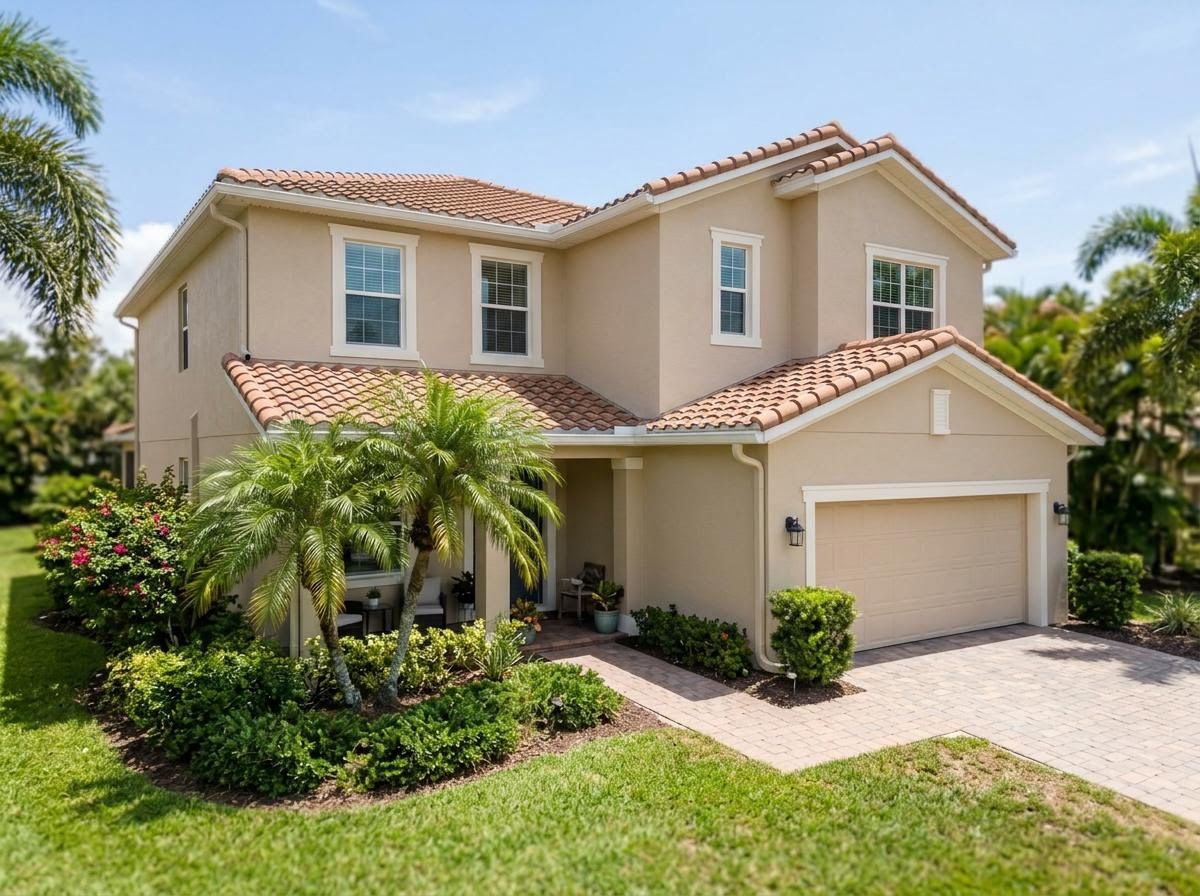
Let me guess: You painted your house three years ago, and now it looks like it's been baking in an oven for a decade.
Welcome to Sarasota, where our gorgeous sunshine comes with a hidden tax—it absolutely destroys exterior paint. With 15 years of painting experience, I've watched homeowners make the same expensive mistake over and over: choosing colors that look beautiful in the store but fade faster than a tourist's first-day tan.
Here's the truth most painters won't tell you: not all paint colors are created equal when it comes to UV resistance. The science is simple—certain pigments break down faster under intense UV exposure, while others are practically bulletproof.
Today, I'm pulling back the curtain on the five exterior colors that consistently outlast everything else in Sarasota's brutal sun, plus why they work and how to make them last even longer.
Why Sarasota's Sun Is Especially Brutal on Paint
Before we dive into the colors, you need to understand what you're up against.
266Sunny Days Per Year
72%Annual Sunshine
140°F+Dark Surface Temps
Sarasota gets approximately 266 sunny days per year—that's 72% sunshine. Compare that to the national average of 205 days. Add our humidity, salt air, and the fact that UV radiation is more intense this close to the equator, and you've got a perfect storm for paint degradation.
The three main enemies:
UV radiation breaks down chemical bonds in paint pigments
Heat causes paint to expand and contract, leading to cracking
Humidity and salt accelerate oxidation and chalking
Now, here's where it gets interesting: dark colors absorb more heat (often reaching 140°F+ on your siding), while certain light colors reflect UV differently. The pigments themselves matter just as much as the shade.
The 5 Colors That Actually Last
1. Clay Beige / Warm Tan (My #1 Recommendation)
Clay Beige
Mexican Sand
Accessible Beige
Why it works: Earth-tone pigments, particularly those with iron oxide, are among the most stable compounds in paint chemistry. They reflect a substantial amount of UV while absorbing less heat than darker colors.
Real-world performance: I have clients with clay beige homes that still look crisp after 8-10 years. The color might lighten slightly, but it fades so evenly you won't notice.
💡 Pro Tip:Look for paint names containing "clay," "adobe," "sand," or "khaki." These typically use iron oxide pigments. My go-to is Benjamin Moore's "Mexican Sand" or Sherwin-Williams' "Accessible Beige."
Expected Lifespan8-10 Years
2. Warm White (Not Pure White—Important Distinction)
Warm White
Swiss Coffee
Alabaster
Why it works: Here's the catch with white: pure bright white uses titanium dioxide, which is incredibly UV-stable, but shows dirt and oxidation like crazy. Warm whites use a blend that includes yellow iron oxide, giving you UV resistance AND forgiving appearance.
Real-world performance: Warm whites hide the inevitable chalking that occurs over time. I've seen properly applied warm white last 7-9 years before needing attention.
What to avoid: Stark, cool whites. They'll show every bit of dirt, mildew, and oxidation. You'll be pressure washing constantly.
💡 Pro Tip:"Swiss Coffee," "Alabaster," and "Navajo White" are winners in Sarasota.
Expected Lifespan7-9 Years
3. Sage Green / Muted Olive
Sage Green
Clary Sage
October Mist
Why it works: Quality sage greens use chromium oxide pigments, which have exceptional UV stability. Unlike bright greens (which fade terribly), these muted tones are workhorses.
Real-world performance: I painted a home in sage green seven years ago near Siesta Key—it's exposed to direct Gulf sun and salt spray. Still looks incredible.
The science: Chromium oxide is literally one of the most lightfast pigments available. Museums use it for outdoor sculptures.
💡 Pro Tip:Stick with muted, grayed-down greens. Sherwin-Williams' "Clary Sage" or Benjamin Moore's "October Mist" are solid choices.
Expected Lifespan7-9 Years
4. Medium Gray (The Unexpected Champion)
Medium Gray
Repose Gray
Agreeable Gray
Why it works: Modern gray paints use carbon black and titanium dioxide blends—both extremely UV-resistant. Medium grays (not too light, not too dark) balance heat absorption with fade resistance beautifully.
Real-world performance: Grays have exploded in popularity here, and for good reason. A properly applied medium gray can easily go 8+ years.
The sweet spot: Aim for grays in the medium range. Too light shows dirt and algae; too dark absorbs excessive heat causing expansion issues.
💡 Pro Tip:"Repose Gray" and "Agreeable Gray" aren't just trendy—they're legitimate performers in Florida sun.
Expected Lifespan8+ Years
5.Terracotta / Muted Red-Brown
Terracotta
Cavern Clay
Redend Point
Why it works: Like the beiges, terracotta uses iron oxide—incredibly stable. The reddish-brown tones are essentially rust, one of nature's most permanent colorations.
Real-world performance: I've seen 12-year-old terracotta homes in Sarasota that look better than 4-year-old navy blue ones. It's not even close.
Bonus benefit: Terracotta hides the slight reddish oxidation that can occur on some surfaces, making it even more forgiving.
💡 Pro Tip:Works beautifully with Spanish or Mediterranean architecture. Try "Cavern Clay" or "Redend Point."
Expected Lifespan10-12 Years
The Colors to AVOID (Even Though They're Gorgeous)
I wish I had better news about these, but they're money pits in Sarasota:
Navy Blue / Dark Blue: Fades to a sad grayish-purple within 3-4 years. The organic blue pigments just can't handle our UV exposure.
Bright Red: Unless you want pink in three years, skip it. True reds require organic pigments that break down rapidly.
Forest Green / Hunter Green: Will turn yellowish-brown. I've never seen a dark green that lasted more than 5 years looking decent.
Black: Absorbs so much heat (160°F+) that it causes premature paint failure from expansion/contraction. Also fades to charcoal gray.
Beyond Color: 3 Ways to Maximize Your Paint's Lifespan
Even the best colors will fail prematurely if you skip these steps:
Quality over everything. There's a reason I recommend premium paints—they have 2-3X the pigment concentration and better binders. A $70/gallon paint that lasts 10 years beats a $35/gallon paint that lasts 4 years. Every. Single. Time.
Proper surface prep is non-negotiable. I'd estimate 70% of premature paint failure comes from poor prep, not color choice. Your substrate must be clean, dry, and properly primed.
Consider sheen carefully. Flat paint fades less noticeably but shows dirt more. Satin reflects more UV but shows imperfections. For Sarasota, I recommend satin or low-luster finishes as the best compromise.
The Bottom Line
If you want your next paint job to still look great when you're refinancing in 7-10 years instead of repainting in 4, stick with these five color families. They're not just pretty—they're scientifically formulated to handle exactly what Sarasota throws at them.
The money you save on not repainting every few years? That's your vacation fund.
And here's my final piece of advice: hire a painter who understands this stuff. The cheapest quote usually comes from someone cutting corners on prep, using builder-grade paint, or both. A knowledgeable local painter knows which products perform in our specific climate and won't leave you with a faded mess in three years.
Your home is probably your biggest investment. Choose colors that protect it.
Questions About Your Specific Project?
Have questions about specific colors for your home? Drop them in the comments below—I read and respond to every one.
Written by a local Sarasota painter with 15 years of painting experience.