Prep Work: Key to Lasting Paint in Florida
Exterior Painting, Florida Climate, Prep Work, Jacksonville
Why Prep Work Is the Secret to a Paint Job That Lasts in Florida's Climate
If you live in Jacksonville or anywhere along Florida’s sun-soaked coast, you already know our climate is tough on homes. Between blazing UV rays, heavy afternoon storms, and year-round humidity, exterior paint takes a beating. Many homeowners ask, “How long does exterior paint last in Florida?” or panic when they see bubbling and wonder, “Why is my paint peeling?” The honest answer almost always comes back to one thing: the quality of the prep work before the first drop of paint ever hits your home.
Florida’s Climate: Beautiful to Live In, Brutal on Paint
Florida’s sunshine is part of what makes living here so appealing, but it’s also the reason standard exterior paint fails faster here than in cooler, cloudier parts of the country. Intense sunlight degrades standard paint much faster than in milder climates. UV rays break down the binders in paint, causing colors to fade, chalk, and eventually crack. Add in salt air near the coast, daily temperature swings, and moisture that creeps into every tiny opening, and you have a recipe for premature peeling if the surfaces weren’t prepared correctly from the start.
In many northern states, homeowners can sometimes get away with a quick wash and a fresh coat. In Jacksonville and the rest of Florida, that shortcut almost guarantees disappointment. The environment here exposes every flaw in the prep work. That’s why professional painters who specialize in Florida homes treat preparation as at least half the job, not an afterthought.
How Long Does Exterior Paint Last in Florida?
Let’s tackle one of the most common questions first: How long does exterior paint last in Florida? In our climate, most exterior paint jobs last about 5 to 7 years, according to Florida painting contractors and industry research. In ideal situations—high-quality 100% acrylic paint, excellent surface preparation, and regular maintenance—some homes can stretch that lifespan closer to 8 to 10 years.
Compare that to cooler, less humid regions, where a decent paint job might last 10 to 15 years without much trouble. The difference isn’t just the paint itself; it’s how the paint interacts with the surface underneath when it’s constantly stressed by UV, moisture, and heat. Proper prep work—cleaning, repairing, priming, and sealing—gives the paint a stable, dry, and smooth base so it can perform at its best for as long as possible in Florida’s harsh conditions.
📌 Key Takeaway: In Florida, a “good” exterior paint job should last around 5–7 years. With premium products and meticulous prep, you can realistically aim for closer to a decade of protection and curb appeal.
Why Prep Work Matters More Here Than Almost Anywhere Else
So what exactly makes prep work the secret to a long-lasting paint job in Florida’s climate? It comes down to one crucial principle: thorough preparation means the paint will adhere better and last longer. Paint is only as strong as the surface it’s stuck to. If that surface is dirty, chalky, damp, cracked, or peeling, even the best paint money can buy will fail prematurely.
UV-damaged surfaces: Sun-baked stucco and siding often develop hairline cracks and chalky residue. If this isn’t removed and repaired, new paint bonds to dust instead of the wall—and peels as soon as the dust loosens.
Moisture intrusion: Florida’s humidity means surfaces frequently have trapped moisture. Without proper drying time, sealing, and priming, that moisture pushes outward, causing blistering and peeling from the inside out.
Mold, mildew, and algae: Shady sides of the house and areas near landscaping often host organic growth. Painting over it is like putting a bandage on a splinter—the problem keeps growing underneath and eventually breaks through the surface.
Professional Florida painters know that prep isn’t glamorous, but it’s what separates a paint job that looks good for a year from one that still looks sharp many summers later. Companies that treat prep with the same importance as painting itself consistently deliver better results—and happier homeowners.
“Why Is My Paint Peeling?” – Common Florida-Specific Causes
If you’re staring at flaking or bubbling paint and wondering, “Why is my paint peeling?” you’re not alone. In Florida, peeling is one of the top complaints homeowners have about their exterior. While it can look like a product failure, it’s usually a prep failure made worse by our climate. Here are the main culprits:
High humidity and trapped moisture: When surfaces aren’t fully dry or moisture issues (like leaky gutters or unsealed cracks) aren’t addressed, water gets trapped behind the paint. As it tries to escape, it pushes the paint off the surface, causing blisters and peeling.
Intense sun exposure: Florida’s UV levels can quickly break down low-quality or improperly applied paint. Over time, the coating becomes brittle, cracks, and starts to separate from the substrate, especially on south- and west-facing walls that get the most sun.
Dirty, chalky, or glossy surfaces: If the house wasn’t thoroughly washed, sanded, or de-glossed before painting, the new paint never truly bonded. It may look fine for a year or two, then suddenly start peeling in sheets when the Florida heat expands and contracts the surface.
Multiple old layers of failing paint: In older Jacksonville neighborhoods, some homes have been painted over again and again. If the underlying coats were already failing, new paint just adds weight and tension, making the entire system more likely to peel.
💡 Pro Tip: If your paint is peeling in specific spots—like near roof lines, windows, or along the base of walls—those are often signs of localized moisture problems. A professional painter will investigate and fix the source before repainting.
The Florida-Proof Prep Checklist: What Pros Do Before They Paint
So what does thorough prep actually look like for a Florida home? Here’s a step-by-step look at the kind of process that helps exterior paint last its full lifespan—even in Jacksonville’s challenging climate:
Detailed inspection: A reputable painter starts by walking the entire property, identifying peeling areas, hairline cracks in stucco, wood rot, chalking, mildew, and gaps around doors and windows. This guides the prep plan.
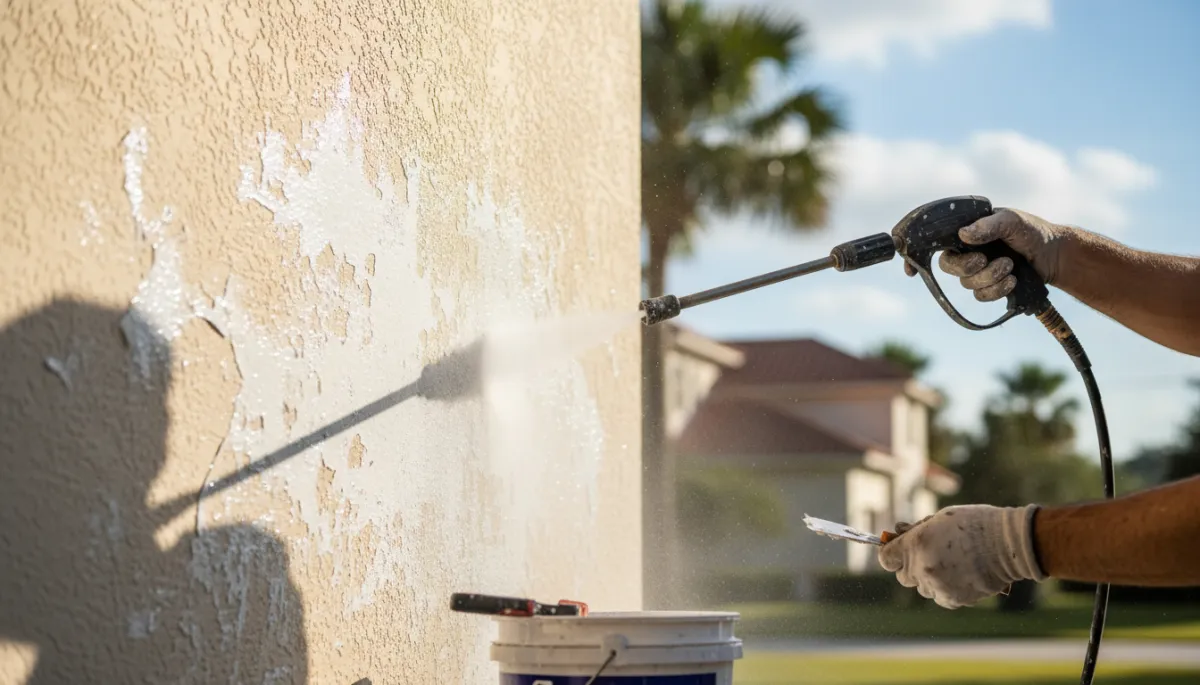
Thorough cleaning: Pressure washing (at appropriate pressure for each surface) removes dirt, salt, mildew, chalk, and loose paint. In Florida, this step is non-negotiable; you’re not just cleaning for appearance, you’re creating a sound surface for adhesion.
Addressing mildew and algae: Problem areas are treated with specialized cleaners or mildewcides, especially on the north side of the home and around landscaping where moisture lingers. Painting over live growth is a fast track to failure.
Scraping and sanding: Loose or flaking paint is scraped away, then edges are sanded smooth to prevent “picture framing” where old layers show through. Glossy surfaces are scuffed so the new coating can grip instead of sitting on top like a sticker.
Repairs and caulking: Cracks in stucco are filled, damaged wood is repaired or replaced, and gaps around windows, doors, and trim are sealed with high-quality exterior caulk. This not only improves the look but also blocks moisture intrusion—critical in a humid, rainy state like Florida.
Spot-priming and full-priming where needed: Bare wood, repaired stucco, and heavily chalked areas are primed with products designed for Florida’s conditions. In some cases—especially on older homes or when changing from dark to light colors—a full prime coat is the smartest investment for longevity.
Masking and protection: Windows, fixtures, landscaping, and hardscapes are carefully masked and covered. This might not affect how long the paint lasts, but it speaks volumes about professionalism and respect for your property.
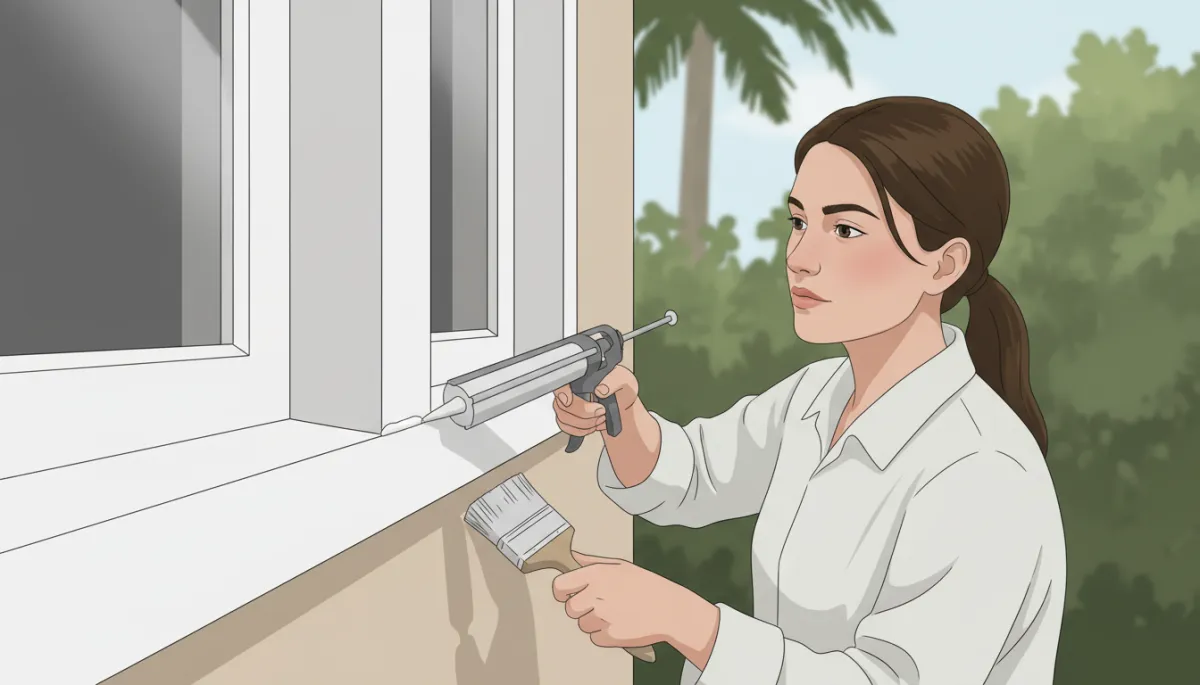
Careful caulking and priming around trim dramatically extend paint life in humid climates.
Prep + Premium Paint: The Winning Combo for Florida Exteriors
While prep work is the foundation, the paint you choose still matters—especially in a state where UV, rain, and humidity are constant. Florida painting pros often recommend 100% acrylic exterior paints with built-in UV and mildew resistance. Premium lines from brands like Sherwin-Williams, Benjamin Moore, and Behr are engineered to handle intense sunlight and frequent wet–dry cycles better than economy-grade paints.
But even the best paint can’t compensate for skipped prep. Think of it like putting a luxury roof on a house with rotten rafters—it might look great at first, but it won’t last. When meticulous preparation is combined with climate-smart products and finishes, that’s when you see Florida homes whose paint still looks fresh years after the neighbors’ siding has started to chalk and peel.
📌 Key Takeaway: In Florida, longevity comes from the combination of thorough prep, high-quality 100% acrylic paint, and the right sheen—typically satin or eggshell on walls and semi-gloss on trim.
How Proper Prep Extends the Life of Your Paint Job
When you invest in proper prep, you’re not just paying for extra steps—you’re effectively buying more years of performance from your paint. Here’s how thorough preparation directly affects how long exterior paint lasts in Florida:
Better adhesion: Clean, dry, primed surfaces give paint something solid to grab onto. This reduces the risk of peeling, especially on sunny, south-facing walls where expansion and contraction are most extreme.
Moisture control: Sealing cracks and gaps and repairing damaged areas keeps Florida’s humidity and rain from sneaking behind the paint film. Less trapped moisture means fewer blisters and bubbles down the road.
Even appearance over time: Smoothing rough edges and feathering old paint lines helps your home age gracefully. Instead of seeing every old repair telegraphed through the new finish, you get a uniform, professional look that lasts longer.
Protection for underlying materials: Proper prep and paint application act as a weather-resistant shell for stucco, wood, and fiber cement. When that shell is applied correctly, it slows down deterioration from UV and moisture, helping protect your home’s structure and value.
Signs Your Last Paint Job Lacked Proper Prep
If your home was painted only a few years ago and already looks tired, there’s a good chance the prep work was rushed. Here are red flags that your previous painter cut corners:
Peeling or bubbling paint within 2–3 years, especially on sunny or damp areas.
Visible dirt or mildew under the paint film, or areas where mildew returns quickly after painting.
Rough, jagged edges where old paint was left unsanded and simply coated over.
Cracks in stucco that were painted over instead of properly filled and sealed.
If these issues sound familiar, don’t be discouraged—they’re fixable. The key is to treat your next paint job as a chance to start fresh with proper preparation tailored to Florida’s environment, so you’re not repainting again in just a couple of years.
Choosing a Painter in Jacksonville: Questions That Reveal Their Prep Standards
Not all painting companies treat prep work with the same seriousness. When you’re interviewing painters in Jacksonville or elsewhere in Florida, the way they talk about preparation will tell you a lot about the results you can expect. Ask questions like:
“How do you handle chalky or peeling areas before painting?”
“What products do you use to treat mildew and algae, and how do you prevent it from returning?”
“Do you repair cracks, caulk gaps, and prime bare or repaired areas? Is that included in your estimate?”
“How many days do you typically spend on prep compared to painting for a home like mine?”
A company that proudly explains its prep process, uses Florida-tested products, and doesn’t rush the schedule is far more likely to deliver a paint job that truly lasts in our climate. If an estimate seems too good to be true, it often means prep steps are being skipped or minimized—and you’ll pay for that shortcut in a few years when peeling and fading set in early.
Final Thoughts: Prep Work Is Your Best Defense Against Florida’s Elements
Florida’s climate is unforgiving on exterior surfaces. Intense sunlight degrades standard paint much faster than in cooler climates, while humidity and frequent rain constantly test the bond between paint and your home’s exterior. When homeowners ask, “How long does exterior paint last in Florida?” or “Why is my paint peeling?” the most honest answer almost always points back to the same core truth: prep work is the secret behind every long-lasting paint job.
Thorough preparation—washing, repairing, caulking, treating mildew, sanding, and priming—creates the solid foundation your paint needs to stand up to years of sun, salt, and storms. When that foundation is paired with high-quality, climate-appropriate paint and a professional application, you can realistically expect your Jacksonville home to stay beautiful and protected for many seasons to come, not just the first year after the painters leave.
If you’re seeing early peeling, fading, or chalking, or if it’s been more than five to seven years since your last paint job, now is the perfect time to plan a repaint that’s built to handle Florida’s unique demands. Choose a painting company that treats prep work as seriously as painting itself, and you’ll see the difference every time you pull into your driveway.
